Business software built around the workflow.
Many businesses operate across disconnected tools, spreadsheets, e-commerce systems and administrative interfaces. This concept demonstrates how those workflows can instead be brought into a purpose-built application where the interface reflects the business process.
It is a product demo, not a deployed client CRM. Its purpose is to explore how a focused operational system can organize the information and actions a team needs to manage.
From scattered data to one operational view.
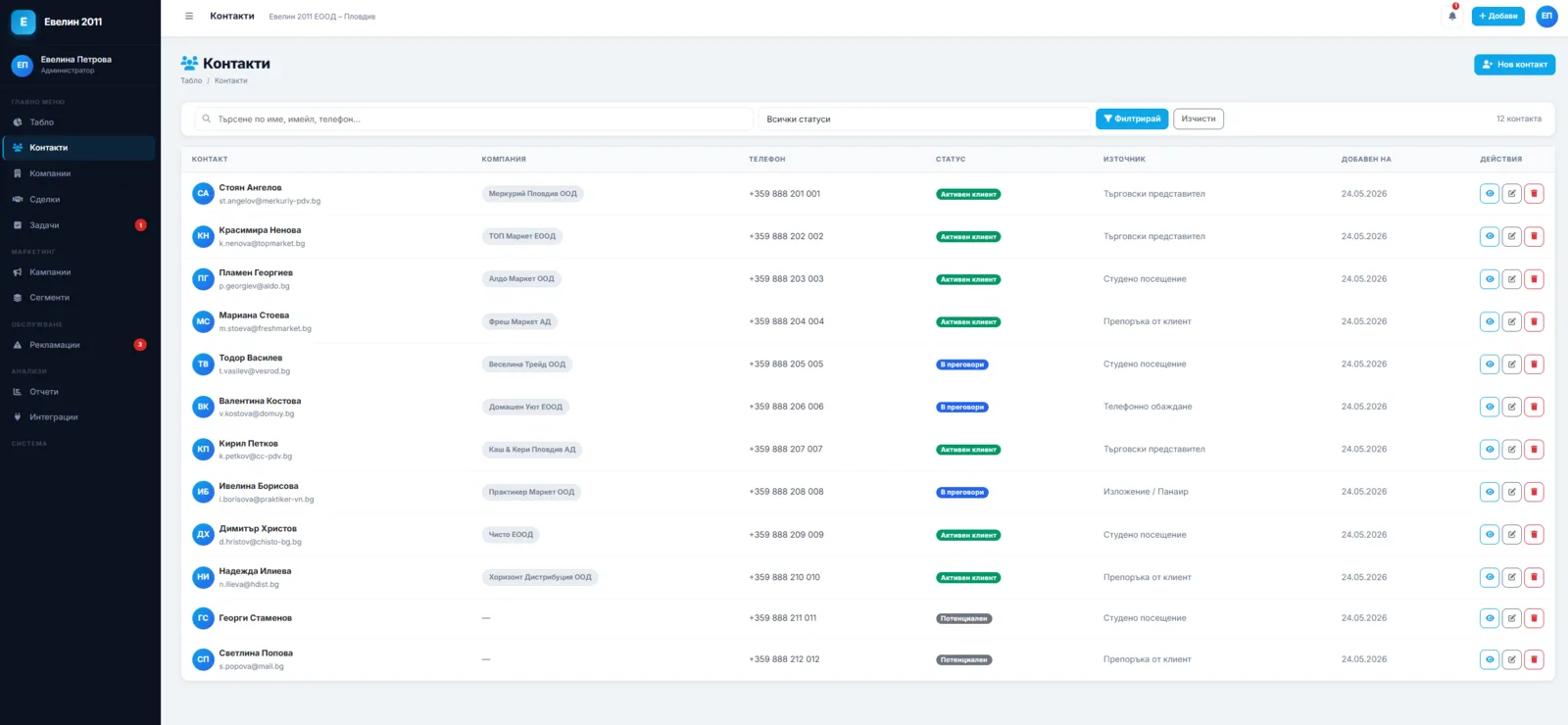
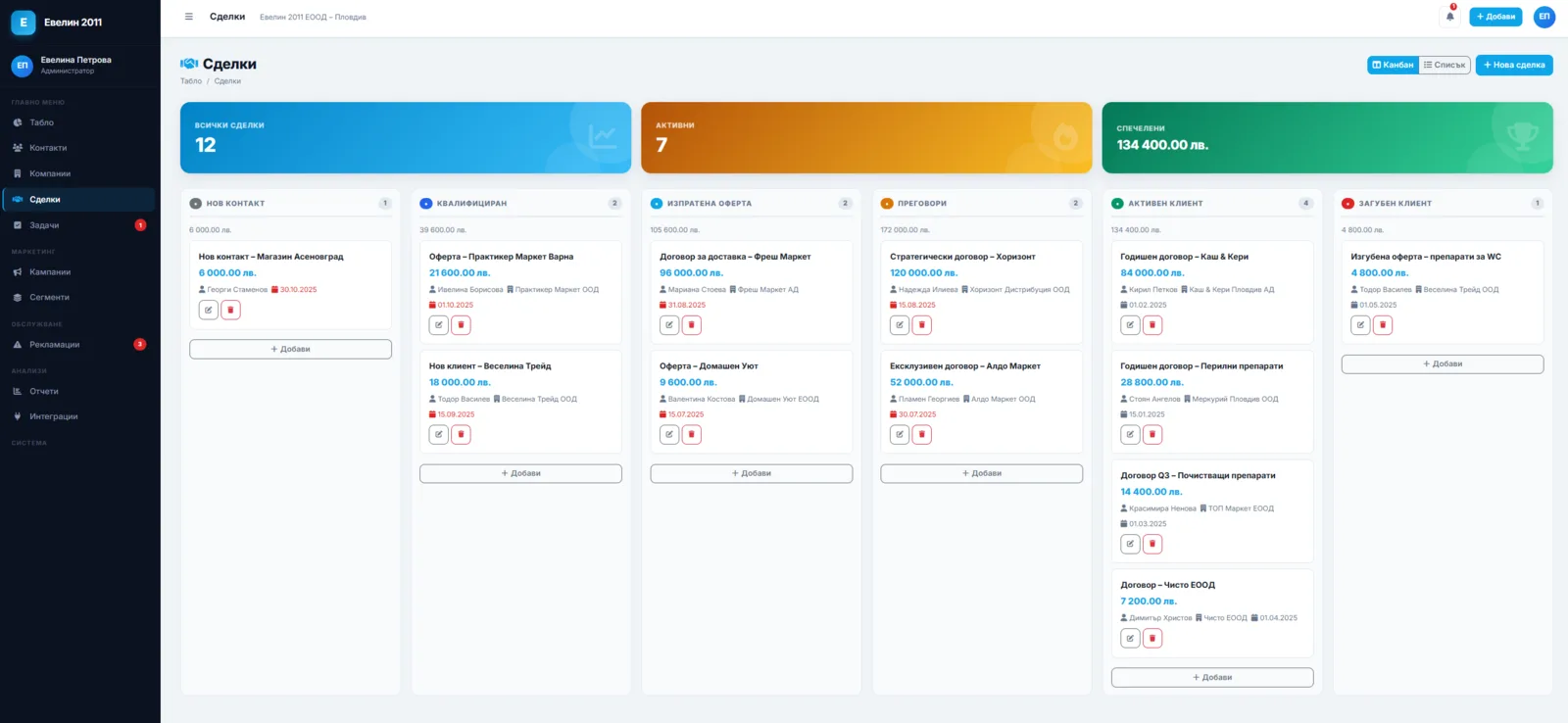
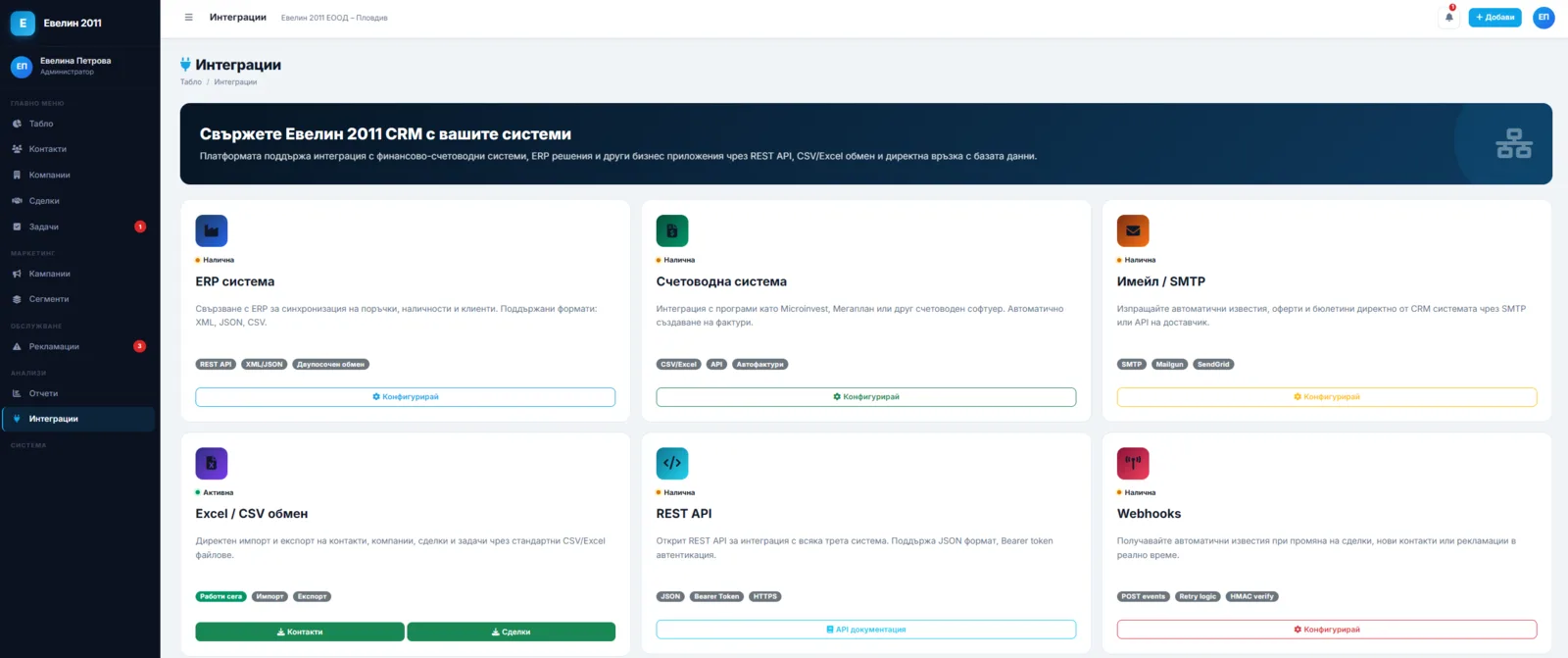
The implemented application brings together a dashboard, contacts, companies, deals, tasks, recent activity, marketing campaigns, reports, integrations and reclamations. These areas are supported by related data rather than isolated dashboard cards.
Useful information before unnecessary complexity.
The dashboard approach is to surface important operational information quickly without requiring a user to move through multiple systems. The demo dashboard includes contact, deal, revenue and task summaries, a deal pipeline, lead sources, recent deals, upcoming tasks and recent activity.
All dashboard values shown in the screenshots are demonstration data. The point is the information architecture and the way related operational information is presented together.
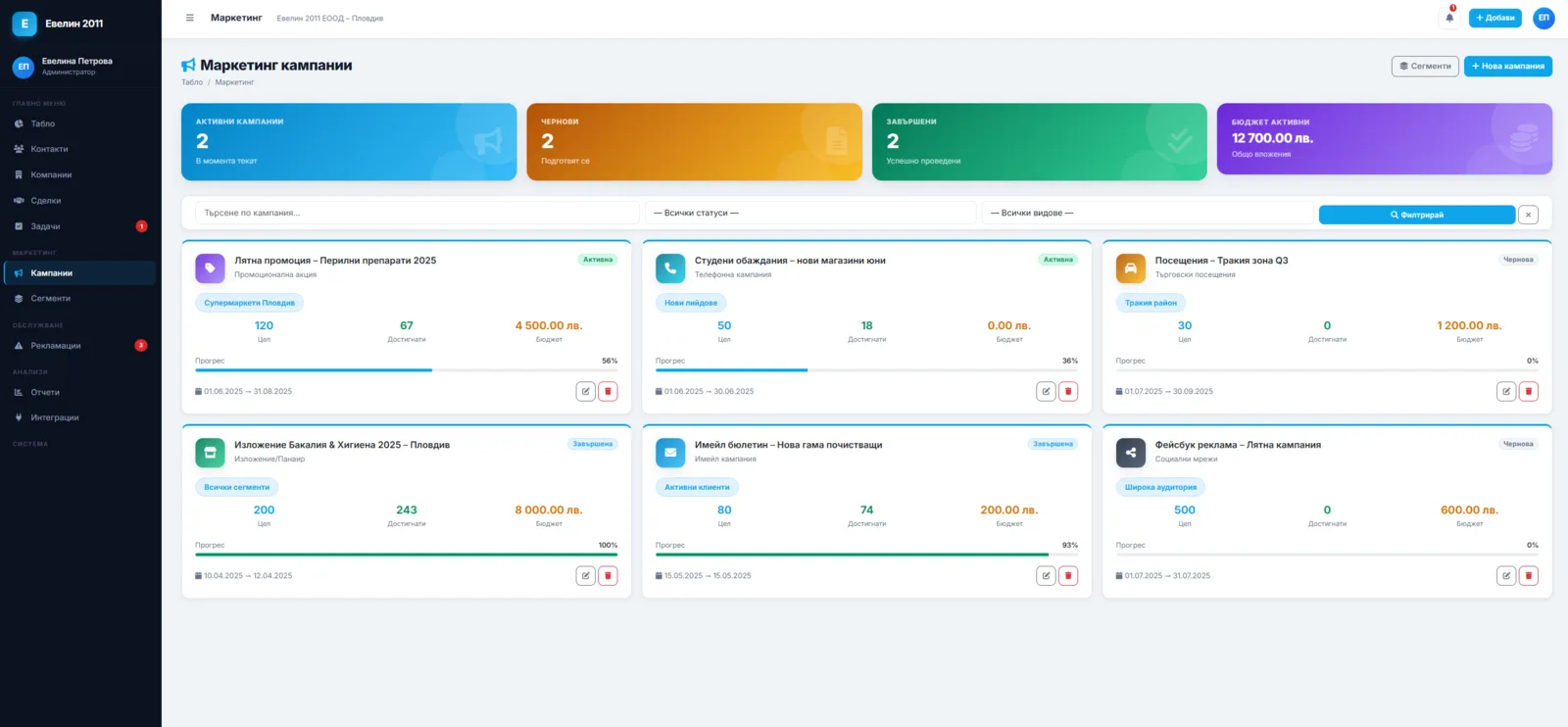
Application structure
The application connects related business entities to focused operational views.
Designing the system, not just the screens.
Building custom business software involves more than creating dashboard cards. The working application includes data relationships between contacts, companies, deals, tasks, activities and notes; navigation and information architecture; reusable page patterns; authenticated access; forms; validation; and workflow-specific states.
The aim is a maintainable application structure and responsive interfaces that make the underlying workflow easier to operate.
When off-the-shelf software does not match the business.
This demo represents the type of problem where a custom application can make sense: an existing system may contain many unnecessary features while still failing to match the actual workflow.
A focused custom application can organize the exact entities, actions and information required by that workflow. It is not a claim that custom software is always preferable, but an exploration of when it can provide a clearer fit.
From concept to working application.
- Application architecture
- Data modelling
- Backend development
- Front-end development
- UI implementation
- Business logic
- Responsive design
- Debugging
- Deployment
Technical stack
Why show a demo project?
Production client work demonstrates experience operating within real constraints. Experimental projects demonstrate something different: the ability to take an idea, define the system around it and build it without an existing specification.
This demo was created to explore that process — from business requirements and information architecture to a functioning application interface.
Software shaped around the problem.
The project demonstrates how I approach custom business applications: understand the workflow first, define the data and interactions around it, and use technology to build the system that supports them.