
Turning external sports data into usable interfaces.
External APIs provide data. They do not provide the finished product.
The development work involved understanding the available data structures, retrieving the required information, transforming it into formats suitable for the application, and building interfaces that made the information useful to the end user. The resulting components became part of a wider publishing system rather than isolated API demonstrations.
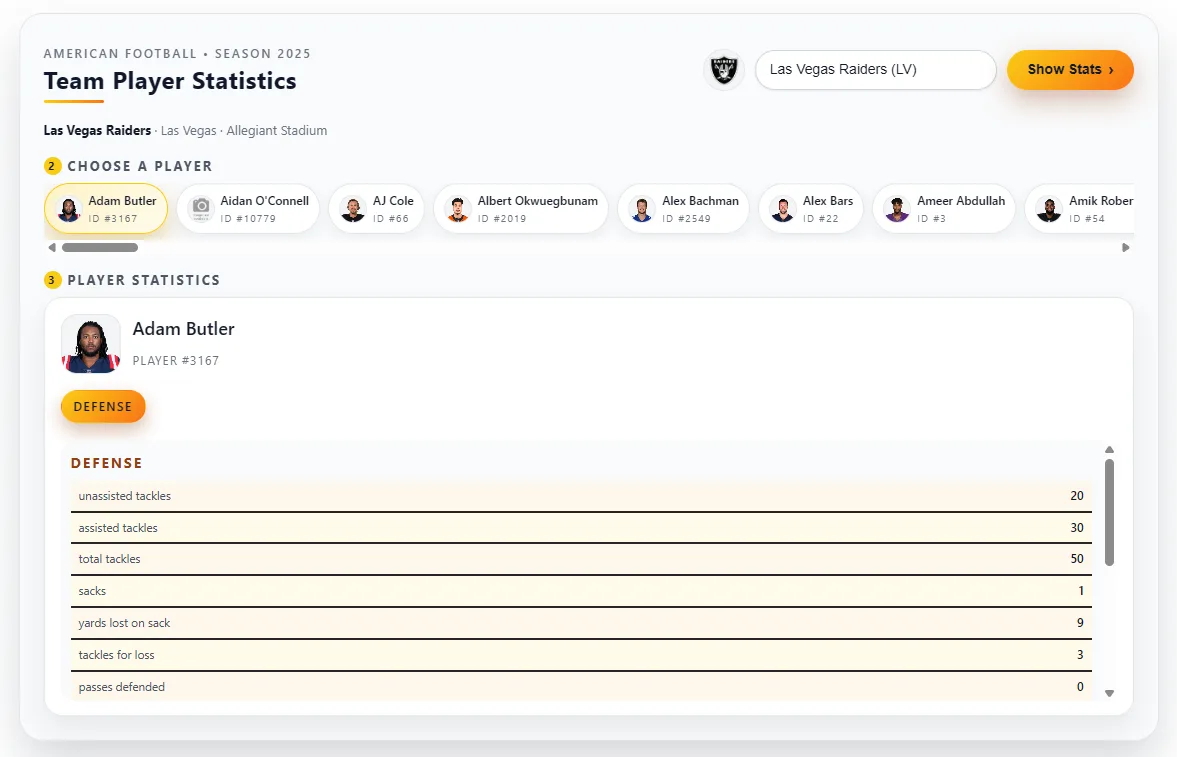
Interactive team and player statistics
The statistics interface allows users to move through structured sports information rather than simply displaying raw API responses. The visible flow moves from team selection, through player retrieval and player selection, to structured statistical presentation.
The implementation brings together dynamic team and player data, player identifiers, available player imagery, statistical categories and a responsive interface within a reusable UI structure.
Multiple data sources, one consistent experience.
The wider sports platform also required external data for sports events, odds, teams, players, statistics and bookmaker-related information. Different external data structures need to be converted into consistent internal and front-end experiences, so that each interface feels like part of the same product.
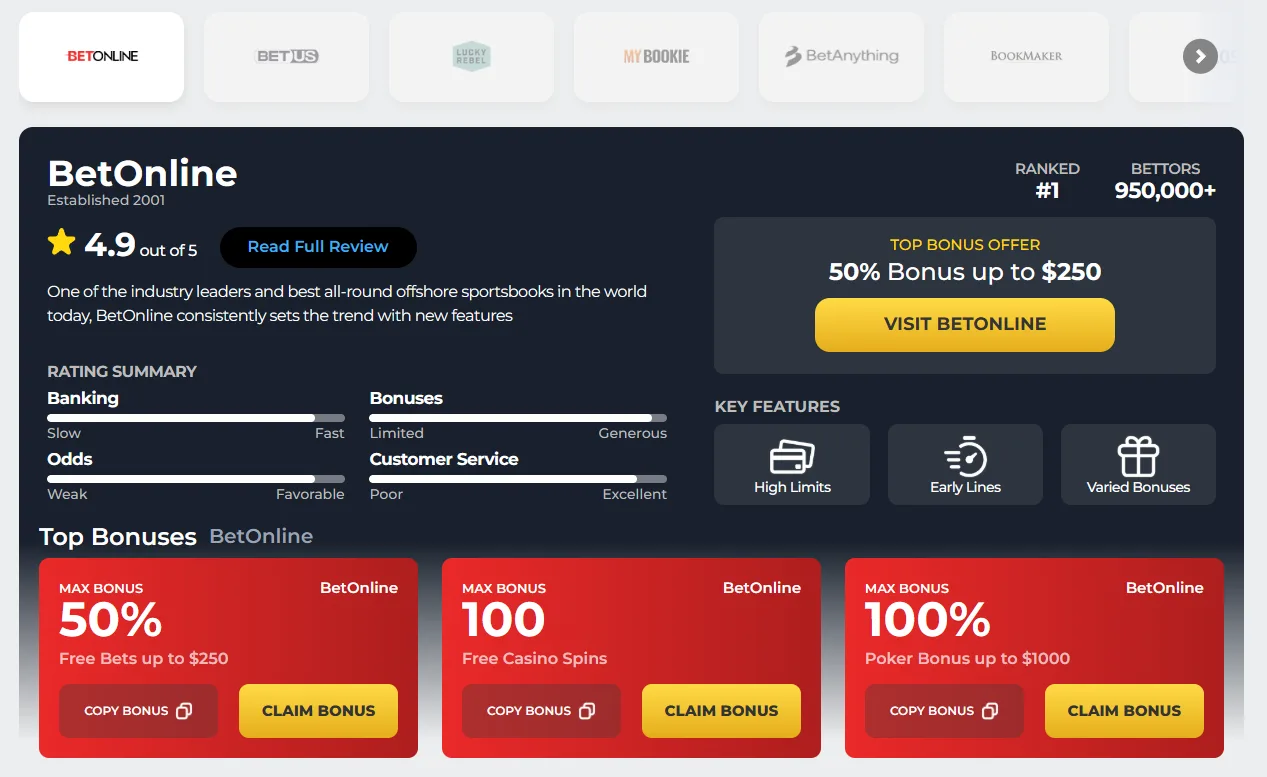
From external data to a usable interface
Connecting an API is only one part of the implementation. External sports data has to be interpreted, mapped into the application’s internal requirements and transformed into interfaces that remain understandable alongside editorial content.
The front end is the final layer between external data sources and the user — handling presentation, hierarchy, responsive behaviour and the overall product experience.
The API call is the easy part.
The engineering work around an integration includes understanding third-party schemas, mapping external identifiers, handling incomplete or changing data, transforming responses, connecting related entities and presenting large datasets clearly.
It also means keeping components reusable and maintaining the integration as external services evolve. The result should be product UI that stays useful to readers, not a request that simply prints JSON.
Built as part of a publishing platform.
These interfaces were not standalone experiments. They were developed as components within a larger WordPress-based sports publishing environment alongside custom Gutenberg blocks, editorial content, sportsbook and review data, rankings, comparison interfaces and other dynamic sports content.
Read the Custom WordPress & Gutenberg Publishing Platform case studyWhat I was responsible for
- API integration
- Data transformation and mapping
- WordPress integration
- Backend and application logic
- JavaScript interactions
- Responsive front-end implementation
- Reusable UI components
- Debugging external data issues
- Production maintenance
Technical stack
From external data to a usable product.
The value of an API integration is not the request itself. It is what can be built around the data.
This work combined external sports data, application logic and custom interfaces to create components that could be reused throughout a continuously evolving publishing platform.