
Offshore Sportsbooks / WordPress platform ownership
The site was
the visible part.
~5 years inside an evolving production platform.
Custom themes, Gutenberg systems, structured data and integrations.

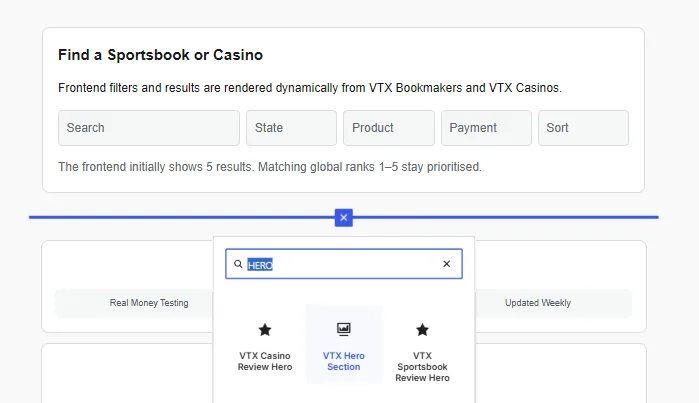
Reveal the layer / 01
The editor owns
the composition.
The block owns its rendering. The interface separates to expose that relationship.
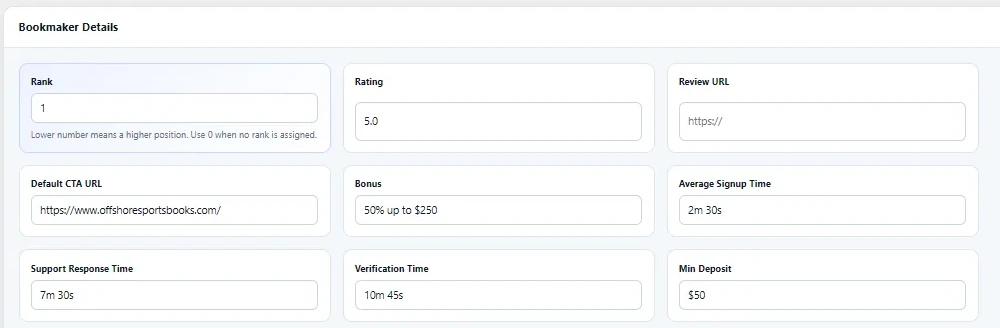
Reveal the layer / 02
The view changes.
The data persists.
Rankings, reviews and calls to action read managed records. PHP turns those fields back into a public interface.
01 / The publishing system
Not thirty pages.
A language for building them.
30+ custom Gutenberg blocks across the platform. Reusable editorial components, with PHP rendering and structured data behind the interface—not a new layout built from scratch for every page.
A smaller decision. A reusable behavior.
Editorial control,
without rebuilding
the homepage.
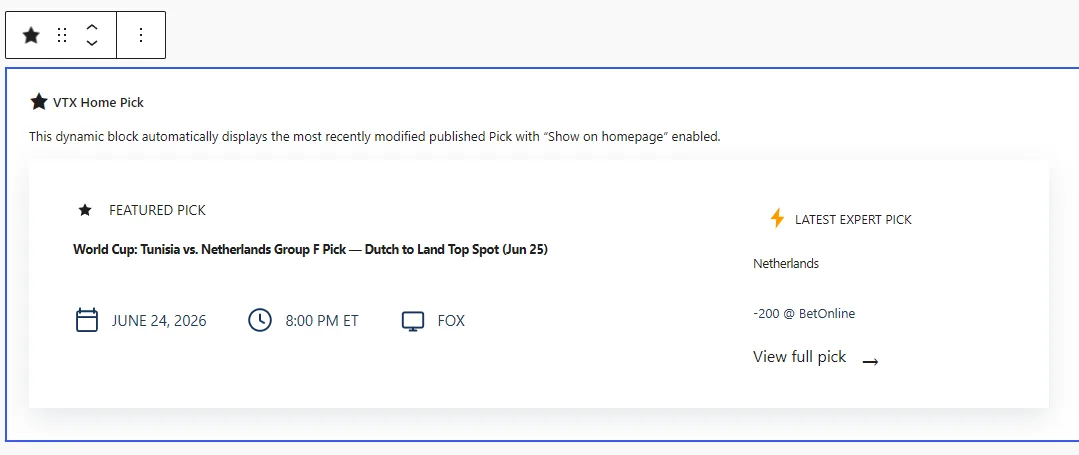
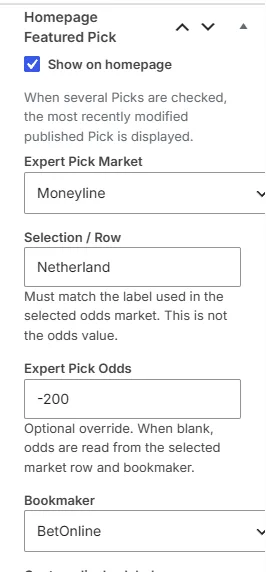
The featured-pick workflow selects the latest eligible published pick. An editor can control eligibility in the sidebar; the dynamic block renders the result.
02 / Connected data
The page changes.
The model holds.
Reviews, rankings and calls to action are views of managed information. WordPress was the content model as well as the publishing interface.
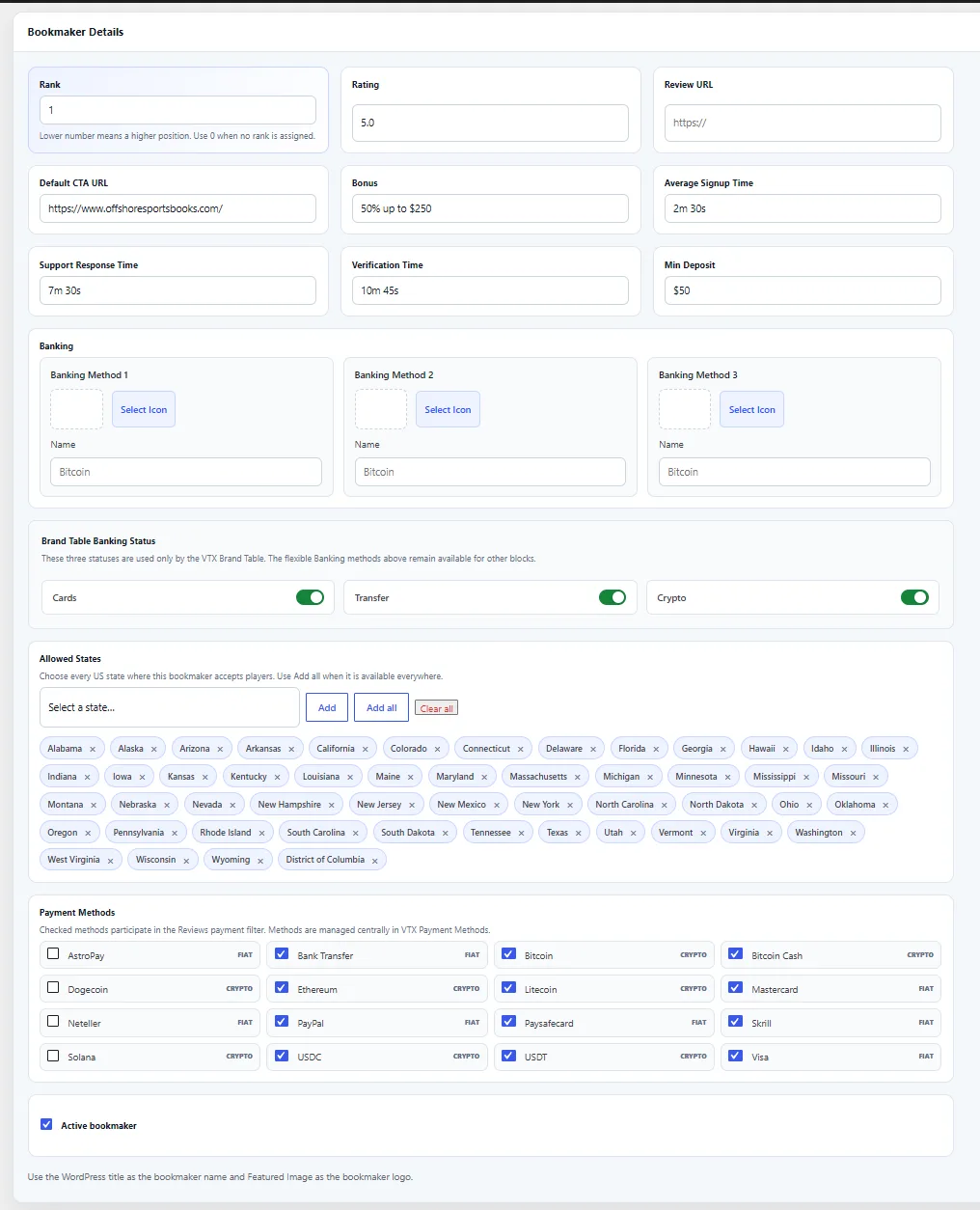
- Identity & order
- Bookmaker / casino records, ratings and rank. Reused by review and comparison components.
- Eligibility & discovery
- States and centrally managed payment methods supply structured filtering.
- Commercial behavior
- Offer fields, CTA destinations and dedicated affiliate-management tooling.
Custom themes and plugins. Post types for editorial picks, news and product content. Taxonomies for organization. Block registration, editor behavior and server-side rendering as separate responsibilities.
External data, controlled at the boundary
An API response
isn’t an interface.
The integration layer has work to do first: request and cache the response, select supported bookmakers, normalize markets, then supply the view.
- 01Request & cache
External feed · WordPress HTTP API · transient cache
- 02Transform
Selected bookmakers · normalized teams and markets
- 03Render
Application logic · PHP view · public interface
The important work
is between systems.
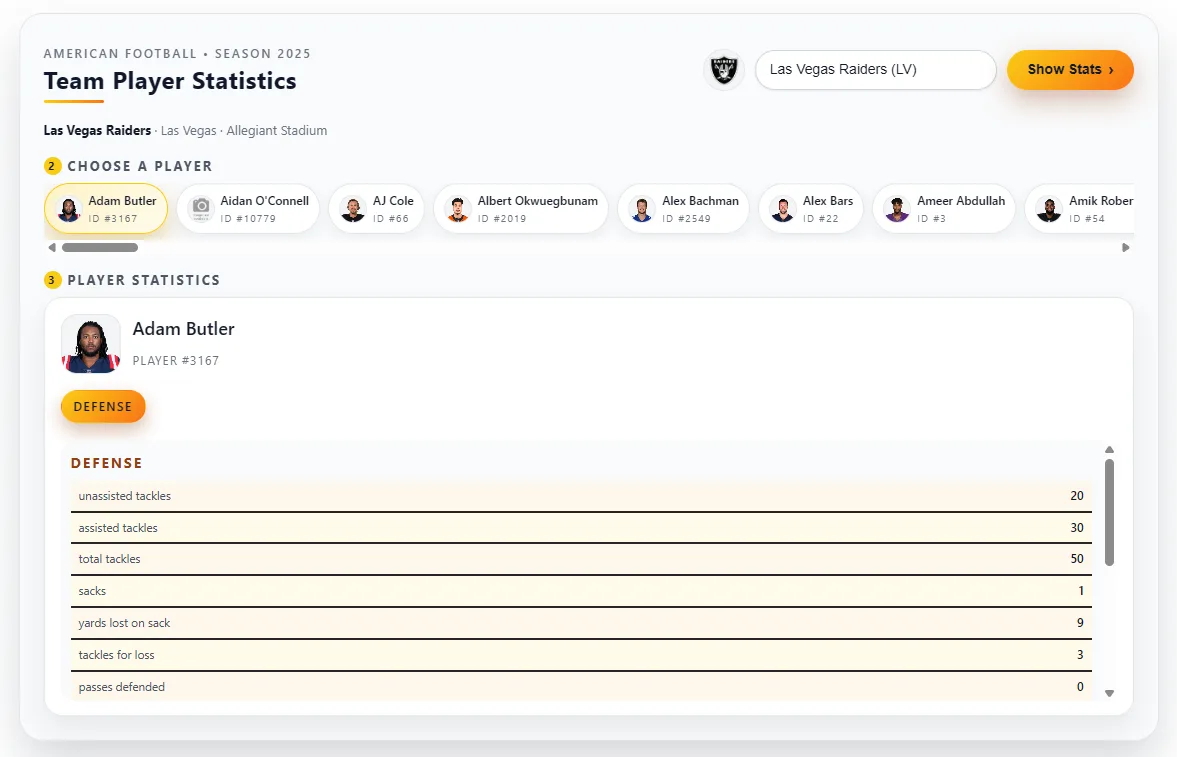
The flow above abstracts behavior verified in the odds-integration source. The statistics screen shows another public-facing part of that integration work—not a trace of that exact request.
No private endpoints or proprietary source are exposed here.
03 / The responsibility underneath
Code is only part
of ownership.
The work continued after the interface shipped: maintaining the application, investigating production problems and evolving the platform through multiple custom theme generations.
Keep the systems working together.
PHP and JavaScript. Custom WordPress themes, plugins, editorial workflows and API integrations.
Understand what the code runs on.
Performance and caching work across a production environment involving Linux, Nginx, MySQL, Redis and Cloudflare.
Stay responsible when it changes.
Deployment, security work, troubleshooting and long-term maintenance—not just the initial implementation.
Responsibility areas from the project history, not a reconstructed infrastructure topology or a claim of sole authorship.
Approximately five years inside
one evolving platform
What stays with you
You live with
the decisions.
Building a system once is one kind of work. Maintaining it across years of new requirements and theme generations is another.
OSB is the clearest expression of my WordPress and PHP experience: the interface, the systems behind it, and the responsibility that connects them.
My engineering work at Media Hype / OSB, within an evolving production platform. Screenshots document interfaces; their embedded commercial figures are not claimed project outcomes.