
Ecommerce Integration / WordPress Plugin / Shopify
StoryCart
Shopify commerce inside WordPress publishing: live product data, reusable editorial components and a shared cart, with checkout kept in Shopify.
PHP · JavaScript · WordPress · Shopify Storefront API · Gutenberg · Elementor
Independent product / architecture & implementation
View Commerce Demo ↗
Project overview
StoryCart is an independently developed WordPress plugin connecting editorial content with Shopify commerce. The current source separates a core plugin from a Pro add-on. The linked commerce demo is its earlier VTX Editorial Commerce reference implementation, not an official StoryCart product homepage.
The problem
Editors need to place purchasable products inside stories and designed pages without copying prices, duplicating a catalog or embedding a separate storefront. The integration lets WordPress own composition while Shopify remains responsible for products, variants, cart state and checkout.
Shopify + WordPress architecture
A server-side PHP gateway communicates with Shopify’s Storefront API and normalizes responses into catalog and cart contracts. WordPress blocks, Elementor widgets and saved components use shared rendering services rather than implementing their own commerce logic.
The plugin stores stable product and variant references plus editorial settings. It does not import a second product catalog or treat saved page content as an authoritative price. Credentials remain encrypted server-side; editor requests pass through protected WordPress endpoints.
My role
I designed and implemented the plugin architecture, Shopify data boundary, editorial selection workflows, reusable frontend components and cart integration. The project combines PHP domain services with JavaScript editor and shopper interactions, alongside failure handling and focused validation tooling.
Catalog & product data integration
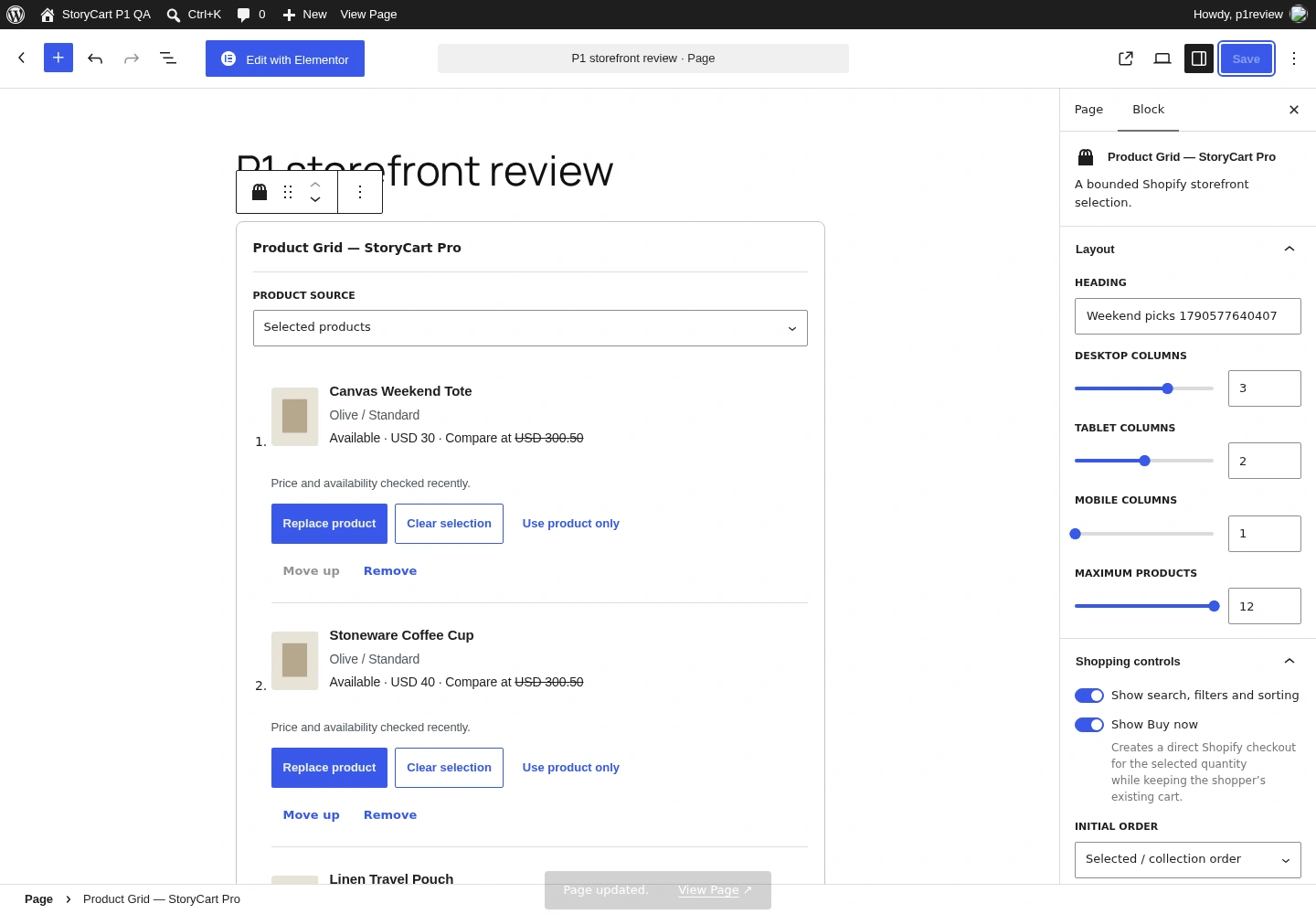
Product discovery supports selection of products and variants. The catalog repository separates descriptive freshness from commercial freshness, uses bounded caching and handles unavailable or stale results explicitly.
This distinction matters when Shopify cannot be reached: retaining descriptive content must not silently authorize a purchase using stale commercial information. Server rendering resolves references against current data, and commerce pages avoid caches that could freeze prices or purchase tickets.
Gutenberg & Elementor integration
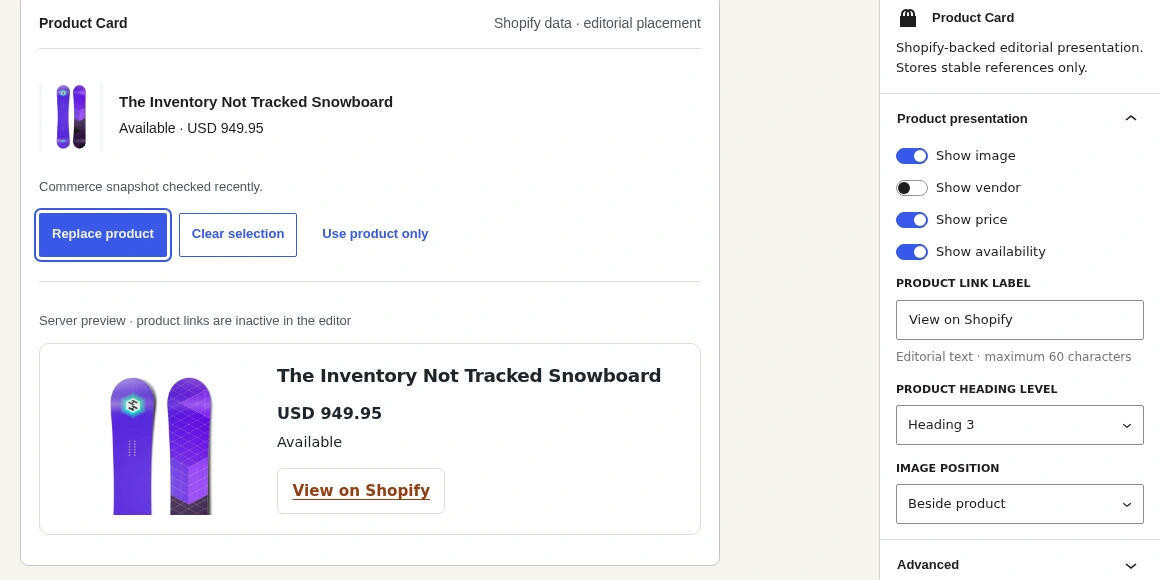
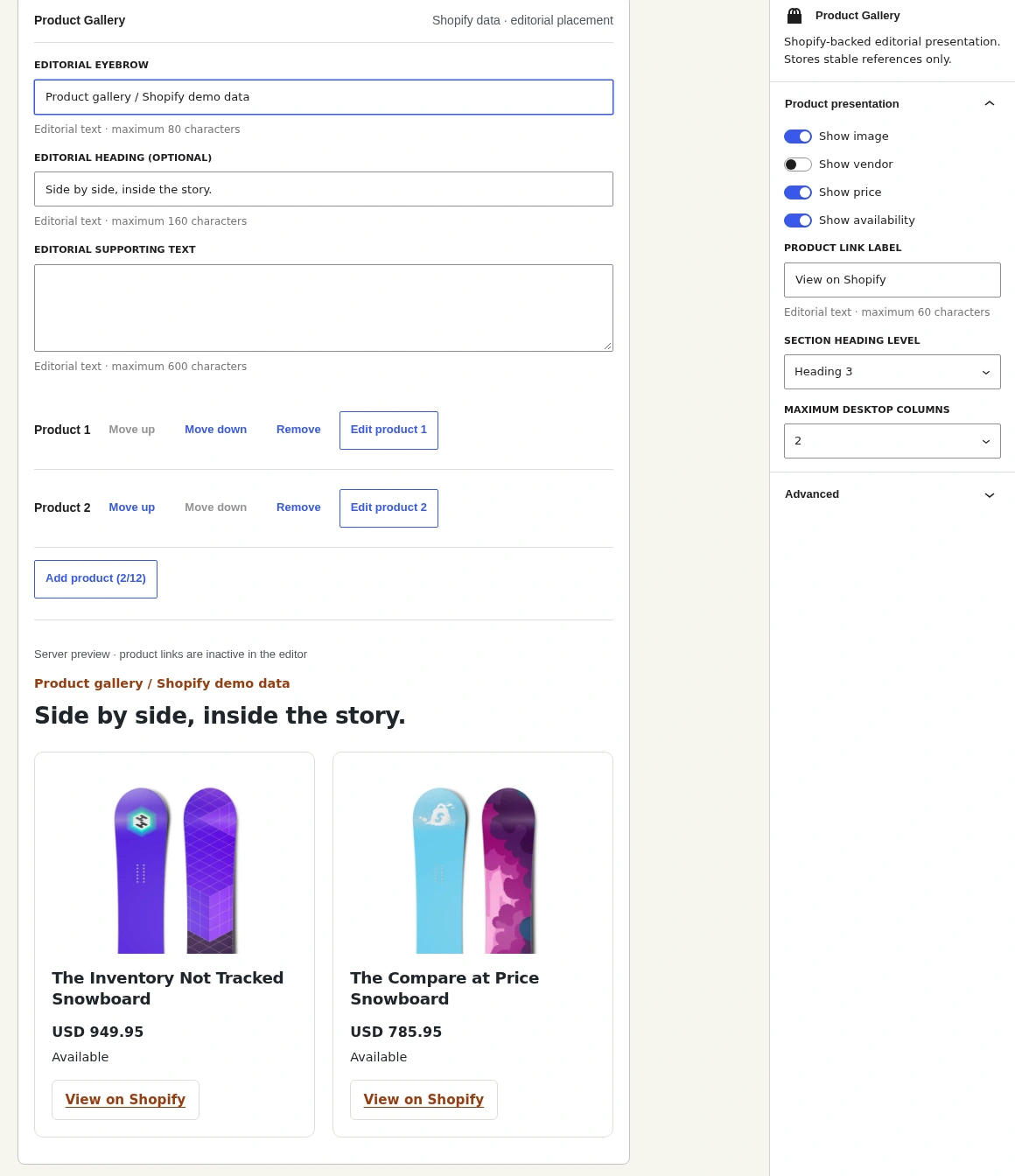
Gutenberg provides a native catalog picker and dynamic commerce blocks. The current StoryCart Pro source includes native Product and Product Gallery Elementor widgets, using the same catalog, rendering and cart contracts. Elementor remains optional.
Editor previews render the real component with purchase actions disabled. Product, variant, presentation and responsive style controls are saved as configuration. The inspected 0.12.0 review candidate places Elementor and advanced layouts in Pro; that packaging is not represented as a published release.
Reusable commerce components
Saved Product and Product Gallery components can be reused through a shortcode. The component workspace supports selection, ordering, editing and duplication without storing mutable price snapshots.
Shared product cards, galleries and presentation settings keep behavior consistent across Gutenberg, Elementor and shortcode placement. Styling controls cover content, typography, images, buttons and spacing without creating a separate cart implementation for each editor.
Cart & checkout workflows
A shared guest cart connects product selection, variant handling, quantity changes and removal across the site. A product with one purchasable option can be added directly; meaningful variant choices require selection.
Shopify confirms cart mutations. Checkout destinations are validated before handoff, and Shopify handles payment. The plugin does not claim authority over completed orders, purchase analytics or inventory synchronization.
Technical challenges
Three authoring surfaces must produce one commerce behavior. Shared server rendering and stable references prevent editor-specific implementations from drifting apart.
Remote API failures and stale caches cannot be hidden behind a convincing product card. Explicit freshness rules, disabled buying states and bounded retries keep the interface honest while preserving useful editorial content. Separate core and add-on boundaries also keep optional integrations from becoming a requirement for basic commerce.
Application screenshots
Authentic application captures. Open any image to inspect the full interface.
Current project status
The local StoryCart repositories contain implemented core and Pro commerce features, including native Elementor widgets. The inspected 0.12.0 candidate is unpublished. The linked commerce-dev site remains a development/noindex demonstration of the earlier integration. The screenshots distinguish that reference implementation from current candidate evidence; no commercial availability or customer adoption is claimed.
View Commerce Demo ↗